by Amit Shekhar · 3 June 2026
Diffusion Models
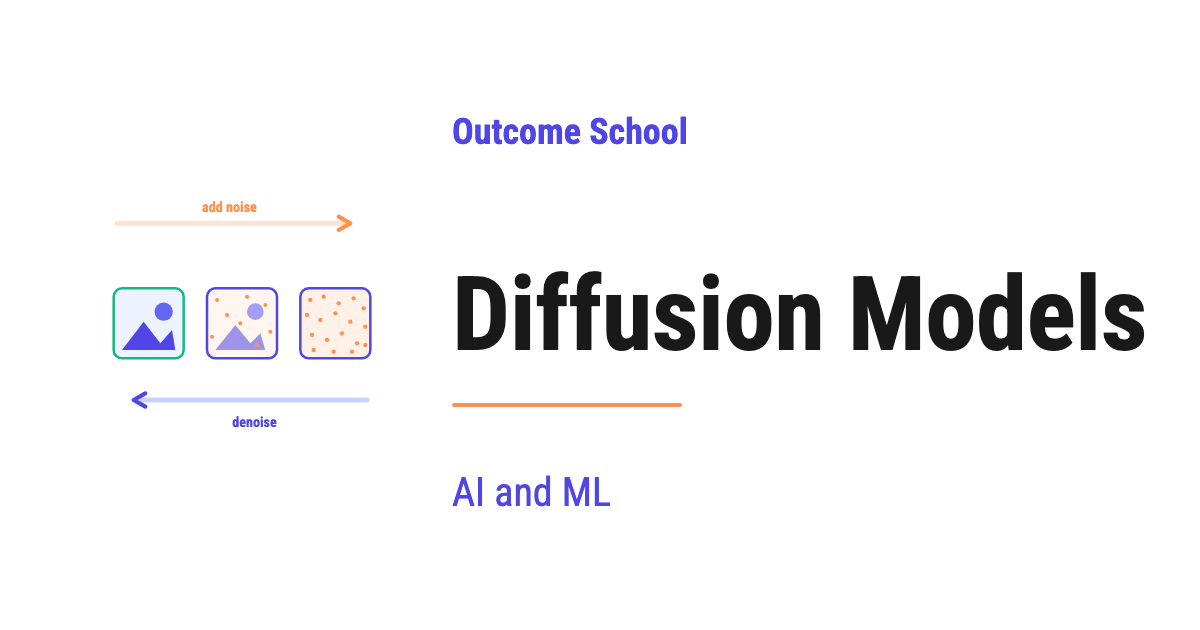
Diffusion Models. We will understand what they are, why we need them, how they work step by step, and how they generate amazing images like the ones we see in tools such as DALL-E, Stable Diffusion, and Midjourney.
Read on Outcome School ↗then come back to lock it in
Before you read, guessWhat is the most effective method for mastering this subject?
Ten seconds, a guess, then read — a wrong guess still makes the answer stick.
What this article covers
- What is a Diffusion Model?
- Why do we need Diffusion Models?
- The two processes: Forward and Reverse
- The Forward Process (adding noise)
- The Reverse Process (removing noise)
- A step-by-step example walk-through
- How the model is trained
- A simple code example
- Conditional Diffusion (text to image)
- Advantages of Diffusion Models
- Where Diffusion Models are used
The article lives on outcomeschool.com. Read it there, then come back: the tutor in the margin has read it and will answer questions, and the questions below check what stayed.